 Adobe
Adobe  Sitecore
  Gradial
  PEGA
PEGA Instant Resolution: The End of Ticket Backlogs
May 04, 2026 | 3 min
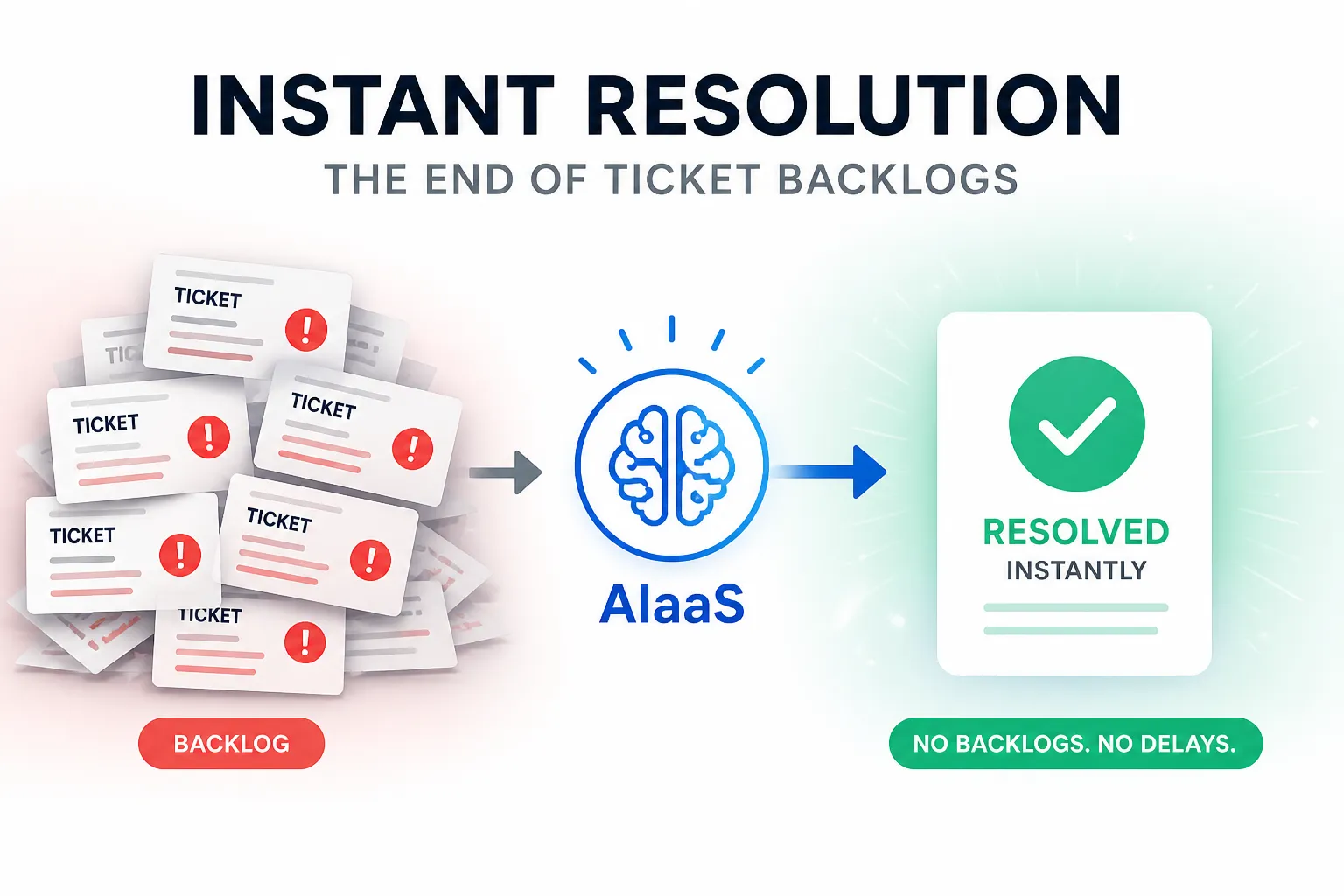
In traditional IT operations, a simple support ticket can trigger a long chain of human dependencies—triage, assignment, investigation, escalation, resolution, and documentation. Each step introduces delays, handoffs, and opportunities for miscommunication.
AI as a Service (AIaaS) changes this paradigm entirely.
Instead of relying on manual intervention at every stage, AI-driven systems can autonomously orchestrate the entire lifecycle—from the moment a ticket is created to the final resolution—eliminating bottlenecks and dramatically accelerating outcomes.
The Traditional Bottleneck Problem
Most organizations are still operating within a human-dependent workflow model:
- Tickets sit in queues waiting for triage
- Engineers are assigned based on availability, not urgency
- Context is lost across handoffs
- Resolution times depend on individual expertise
- Documentation is often incomplete or delayed
Even in high-performing Agile environments, teams spend significant time managing work instead of resolving it. Roles like Scrum Masters, Product Owners, and Engineers focus heavily on coordination, compliance, and communication to keep delivery flowing .
The result? Slower resolution times, higher operational costs, and frustrated end users.
Enter AIaaS: Autonomous Ticket Resolution
AIaaS introduces intelligent agents that operate across the entire support lifecycle:
1. Instant Triage & Classification
The moment a ticket is submitted:
- AI analyzes the request using historical data and context
- Categorizes severity and business impact
- Routes it to the appropriate workflow (not just a person)
2. Context Gathering & Diagnosis
Instead of waiting for an engineer:
- AI pulls logs, metrics, and system data
- Correlates with past incidents
- Identifies probable root causes within seconds
This mirrors how advanced QA and engineering teams are already using AI to detect patterns, cluster failures, and prioritize risk in real time .
At this point, the question isn’t if AI can streamline your operations—it’s how quickly you can start capturing the value.
3. Autonomous Execution & Resolution
This is where AIaaS truly transforms operations:
- Executes predefined remediation scripts
- Triggers infrastructure changes (restarts, scaling, patches)
- Runs validation tests to confirm resolution
- Escalates only when human judgment is truly required
Modern engineering environments already leverage AI to automate code generation, testing, and deployment workflows—AIaaS simply extends this capability into live operations .
4. Continuous Learning & Optimization
Every resolved ticket makes the system smarter:
- Learns from outcomes and feedback loops
- Refines decision-making models
- Improves future resolution accuracy
- Identifies systemic issues before they become incidents
Over time, organizations shift from reactive support models to predictive operations.
5. Automated Documentation & Compliance
One of the most overlooked benefits:
- AI generates complete audit trails
- Updates knowledge bases in real time
- Ensures compliance with SDLC and governance standards
- Maintains full traceability without manual effort
This aligns with the growing need for audit-ready, high-quality delivery environments, where documentation is no longer an afterthought—but an automated byproduct of execution.
The Business Impact
Organizations adopting AIaaS for ticket resolution are seeing:
- 60–80% faster resolution times
- Significant reduction in ticket backlog
- Lower operational overhead
- Improved SLA adherence
- More productive engineering teams
But perhaps the biggest shift is this:
Your best people are no longer stuck resolving repetitive issues—they’re focused on innovation, optimization, and growth.
From Bottlenecks to Flow
AIaaS doesn’t replace your team—it unblocks them.
It removes the friction that slows down delivery and replaces it with intelligent, autonomous workflows that operate at scale. Instead of managing tickets, your organization starts managing outcomes.
If you're ready to move from reactive support to autonomous, AI-driven operations, now is the time to act.
Author

Tom Boller Jr.

Sales Director - Digital
Share this article


Speak With Our Team
Share this article