 Adobe
Adobe  Sitecore
  Gradial
  PEGA
PEGA The Control Layer: Mastering Governance in Agentic AI
Mar 23, 2026 | 3 min
Agentic AI is no longer a futuristic concept—it’s here, embedded in modern software delivery, automation pipelines, and decision-making systems. These AI agents don’t just assist; they act, making decisions, executing workflows, and adapting dynamically.
That power introduces a new reality: risk is no longer just technical—it’s operational, organizational, and even reputational.
To unlock the full value of Agentic AI, organizations must move beyond experimentation and establish robust governance, guardrails, and oversight frameworks. Let’s break down what that actually means in practice.
The New Risk Landscape of Agentic AI
Traditional automation follows deterministic rules. Agentic AI, on the other hand, operates with a degree of autonomy—interpreting inputs, generating outputs, and making decisions in real time.
This introduces several categories of risk:
- Decision Risk – AI making incorrect or suboptimal choices
- Execution Risk – Agents taking unintended actions across systems
- Compliance Risk – Violating regulatory or internal governance standards
- Data Risk – Mishandling sensitive or proprietary data
- Operational Drift – Behavior changing over time without visibility
In modern engineering environments—especially those leveraging AI-assisted development, testing, and delivery—these risks are amplified. For example, AI is now being used to generate code, tests, and even documentation, accelerating delivery but also increasing the need for audit-ready traceability and governance controls .
Governance: Defining the Rules of Engagement
Governance is the foundation. It answers the question: “What is allowed, and under what conditions?”
Effective Agentic AI governance includes:
1. Policy Frameworks
- Define acceptable AI use cases (e.g., code generation, test automation, decision support)
- Establish boundaries for autonomous execution
- Align with regulatory standards (SOC 2, ISO 27001, etc.)
2. Role-Based Accountability
- Assign ownership for AI outcomes (engineering, product, compliance)
- Ensure clear escalation paths for issues or anomalies
3. Traceability & Auditability
- Maintain logs of AI decisions, actions, and inputs
- Ensure every output can be traced back to its origin
In enterprise environments, audit readiness is not optional—it’s a core requirement embedded directly into SDLC practices, ensuring that all artifacts, decisions, and workflows are fully documented and compliant .
Guardrails: Controlling AI Behavior in Real Time
If governance defines the rules, guardrails enforce them.
Guardrails are the mechanisms that constrain and guide AI behavior during execution. Without them, autonomy becomes liability.
Key Types of Guardrails
1. Input & Output Constraints
- Validate inputs before AI processes them
- Filter or structure outputs to prevent harmful or invalid results
2. Action Boundaries
- Restrict which systems an agent can access
- Limit execution authority (e.g., read vs. write permissions)
3. Confidence Thresholds
- Require human approval for low-confidence decisions
- Automatically escalate ambiguous scenarios
4. Continuous Validation
- Use automated testing and validation pipelines
- Detect anomalies, failures, or unexpected behavior in real time
Modern QA environments already leverage AI to detect risk patterns—such as flaky tests, failure clustering, and intelligent risk prioritization—demonstrating how AI can both introduce and mitigate risk simultaneously .
Oversight: Keeping Humans in the Loop (Strategically)
Oversight is where governance and guardrails come together. It ensures that humans remain strategically in control, without slowing down the system.
Levels of Oversight
- Human-in-the-Loop (HITL): Approval required before execution
- Human-on-the-Loop (HOTL): Monitoring with intervention capability
- Human-out-of-the-Loop (HOOTL): Fully autonomous, but audited
The key is not to default to heavy manual control—but to apply the right level of oversight based on risk.
For example:
- High-risk financial or compliance actions → HITL
- Routine engineering tasks → HOTL
- Low-risk automation → HOOTL with audit logs
This mirrors how high-performing Agile teams operate—balancing autonomy with structured oversight to maintain predictable, high-quality delivery outcomes .
Building a Risk-Aware Agentic AI Operating Model
To operationalize all of this, organizations need more than policies—they need a repeatable operating model.
1. Embed Governance into the SDLC
- Integrate AI controls into CI/CD pipelines
- Enforce Definition of Ready / Definition of Done with AI outputs
2. Standardize AI Workflows
- Use structured frameworks (e.g., spec-driven development, agent workflows)
- Ensure consistency across teams and use cases
3. Implement Observability
- Monitor AI behavior, performance, and drift
- Use analytics to identify patterns and risks early
4. Continuously Improve
- Treat AI systems like evolving products
- Use retrospectives, feedback loops, and data to refine controls
Agentic AI can dramatically accelerate your organization—but only if it’s implemented responsibly.
If you're exploring how to introduce governance, guardrails, and oversight into your AI initiatives—or want to assess your current risk posture—let’s connect. We can help you design a practical, scalable framework that enables innovation without exposing your business to unnecessary risk.
👉 Reach out today or schedule time to discuss your AI strategy.
The Bottom Line: Control Enables Scale
The organizations that succeed with Agentic AI won’t be the ones that move the fastest—they’ll be the ones that move with control.
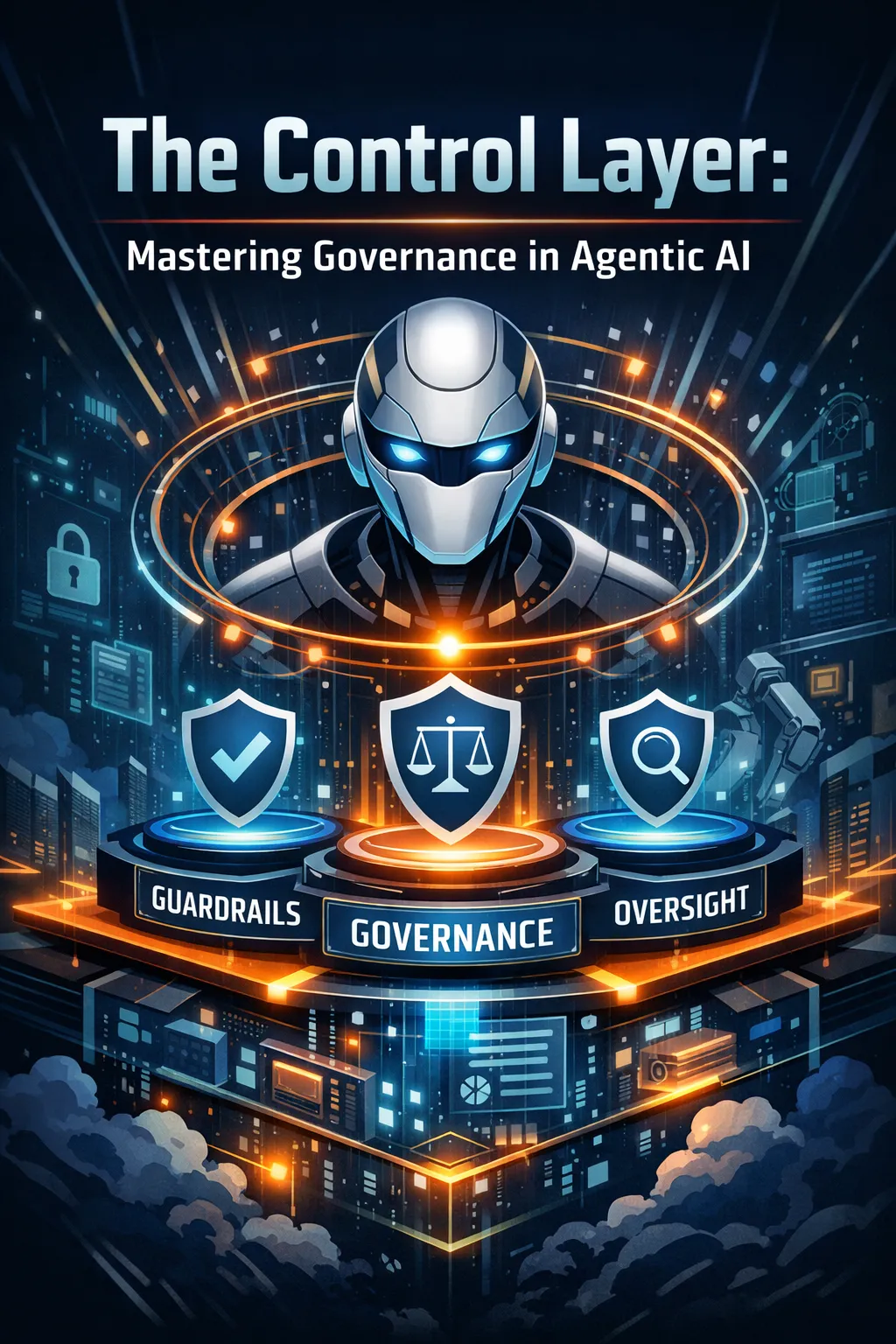
Governance provides clarity.
Guardrails provide safety.
Oversight provides confidence.
Together, they transform Agentic AI from a risky experiment into a scalable, enterprise-ready capability.
Ready to move from experimentation to enterprise-grade Agentic AI?
We work with organizations to implement end-to-end Agentic MOPS frameworks—combining governance, guardrails, and human oversight to drive measurable outcomes while minimizing risk.
📅 Let’s schedule time to talk about your goals, challenges, and how to operationalize AI the right way.
👉 Connect with us today and take the next step toward controlled, scalable AI adoption.
Author

Tom Boller Jr.

Sales Director - Digital
Share this article


Speak With Our Team
Share this article