 Adobe
Adobe  Sitecore
  Gradial
  PEGA
PEGA The Death Of DIY AI: Why AIaaS Is Taking Over
Aug 24, 2026 | 3 min
For the past few years, the enterprise AI conversation has largely centered around one question: What can we build with AI?
Companies launched pilots, formed internal AI teams, experimented with large language models, and invested in new tools. The possibilities seemed endless.
But as AI moves from experimentation into real business operations, the question is changing.
Executives are increasingly asking: How do we actually get value from AI without creating another massive technology initiative?
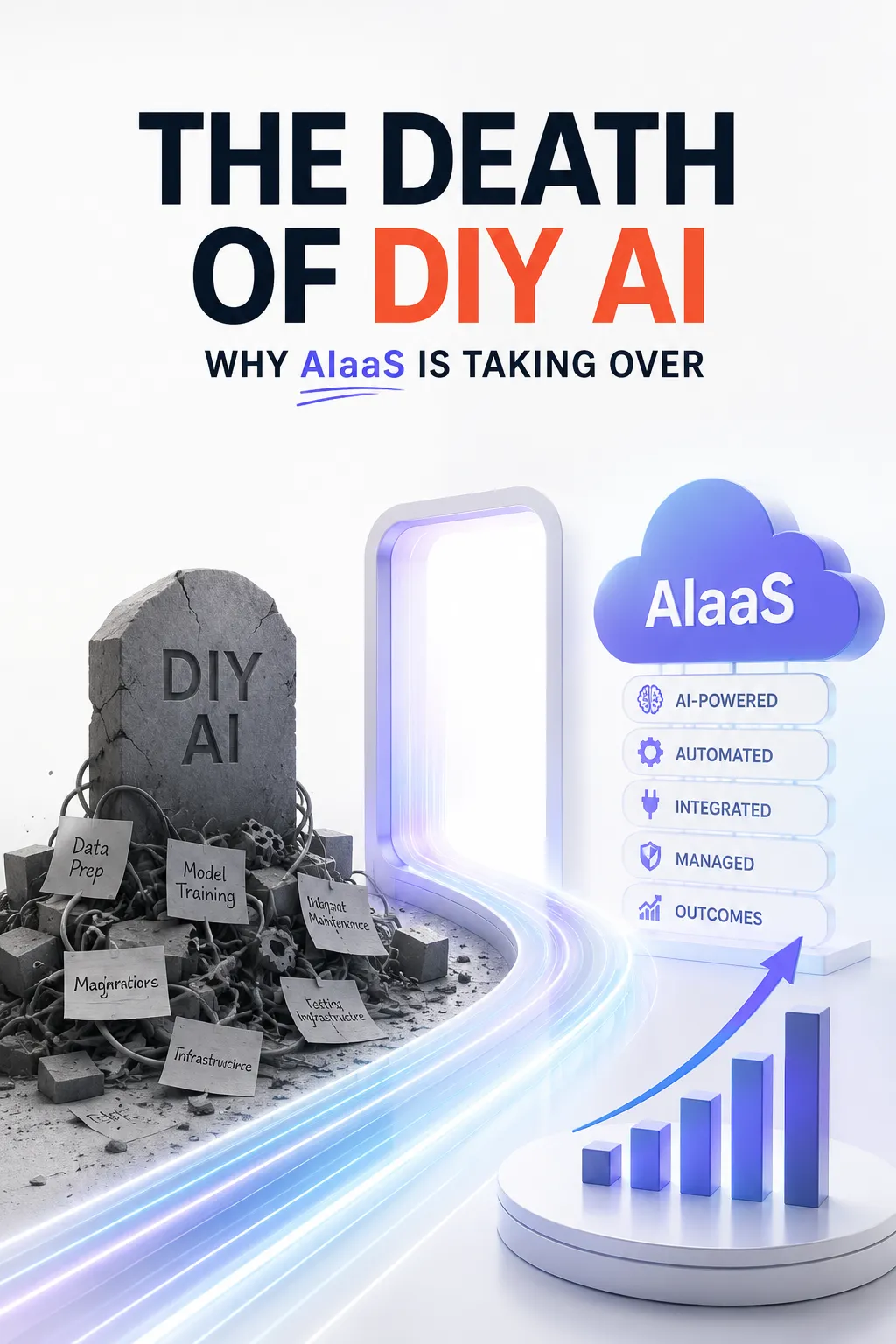
That shift is driving the rise of AI as a Service (AIaaS) — an approach focused less on building everything internally and more on deploying AI capabilities that solve specific business problems, integrate into existing workflows, and produce measurable results.
The era of DIY AI isn't disappearing completely. But for many organizations, it is becoming increasingly difficult to justify.
The Problem With Building AI Yourself
On paper, developing AI internally sounds attractive. You maintain control, build around your own requirements, and develop internal expertise.
In practice, it can quickly become complicated.
A successful AI initiative requires more than access to a model. Organizations may need AI engineers, software developers, data expertise, cloud infrastructure, security and governance processes, integrations, testing, monitoring, and ongoing optimization.
Then there is the operational challenge.
Who maintains the solution after launch? Who updates integrations when systems change? Who monitors performance? Who identifies new opportunities for automation? Who makes sure the AI actually fits into the way employees work?
This is where many AI initiatives stall.
The technology works. The demo looks impressive. But the solution never becomes part of the day-to-day business.
AIaaS Changes the Conversation
AI as a Service shifts the focus from building AI capabilities to achieving business outcomes with AI.
Instead of asking an internal team to assemble every piece of the technology stack, organizations can bring in the engineering, automation, integration, and delivery capabilities needed to move an initiative forward.
The goal isn't simply to give employees another AI tool.
It's to reduce manual work, accelerate execution, improve decision-making, and create repeatable processes that deliver measurable value.
That distinction matters.
An AI assistant that can summarize documents is interesting.
An AI-powered workflow that automatically reviews incoming documents, extracts the relevant information, updates the appropriate systems, flags exceptions, and routes the next action to the right employee can fundamentally change an operation.
That is where AI starts becoming infrastructure rather than experimentation.
From AI Ideas to Working Solutions
At Ciberspring, we see one of the biggest challenges organizations face as the gap between knowing where AI could help and actually implementing it successfully.
A business leader may recognize that employees are spending hundreds of hours manually reviewing information.
An operations team may know that a repetitive workflow could be automated.
An engineering leader may want developers using AI to accelerate coding, testing, documentation, and modernization.
A product team may want AI embedded directly into an existing application.
The idea is rarely the hardest part.
Execution is.
Ciberspring's AI as a Service approach helps organizations bridge that gap by combining AI expertise with the technical execution required to deploy it — including workflow automation, integrations, software engineering, managed services, and ongoing delivery support.
Have an AI initiative you're trying to move from concept to execution? Connect with Ciberspring to discuss where AI can create practical value in your organization.
What AIaaS Looks Like in Practice
The opportunity can look very different depending on the organization.
For Business and Operations Leaders
Imagine a team manually processing hundreds or thousands of documents, emails, requests, or transactions every month.
Rather than simply providing employees with an AI chatbot, AIaaS can help redesign the workflow itself.
AI can extract information, categorize requests, identify exceptions, generate responses, update systems, and route work automatically — leaving employees to focus primarily on the situations that actually require judgment.
The result isn't just "using AI."
It's reducing the amount of manual work required to operate the business.
For IT Leaders
AI initiatives often create additional pressure on already stretched IT organizations.
Security, integrations, infrastructure, governance, maintenance, and application support all have to be considered.
An AIaaS model allows organizations to bring in specialized technical capabilities without having to permanently build every competency internally.
Ciberspring can support the architecture, integration, deployment, and ongoing operation of AI solutions while working within the organization's existing technology environment.
For Engineering Leaders
Software development is becoming one of the clearest examples of how AI can change execution.
AI-assisted and agentic engineering workflows can help teams accelerate coding, testing, documentation, refactoring, analysis, and other repetitive development activities.
But simply purchasing AI development tools doesn't automatically improve engineering performance.
Teams still need the right workflows, standards, integrations, and delivery practices.
Ciberspring helps organizations combine AI-enabled engineering with experienced technical resources and delivery support so that AI translates into faster, more consistent execution.
For Product Leaders
Product teams frequently identify AI features they want to introduce but struggle with the engineering capacity or specialized expertise required to build them.
AIaaS provides a way to accelerate those initiatives without waiting for an entirely new internal team to be hired.
That could mean building an AI-powered feature, creating an intelligent workflow, integrating an existing model, developing an agentic system, or modernizing an application to support new AI capabilities.
The Real Advantage Is Speed to Value
The strongest argument for AIaaS isn't that companies are incapable of building AI themselves.
Many are.
The question is whether they need to.
Every month spent recruiting specialized talent, evaluating infrastructure, developing integrations, and experimenting with architectures is another month before the business sees a return.
AIaaS offers another path.
Organizations can start with a defined business problem, bring in the capabilities required to solve it, deploy the solution, measure the impact, and expand from there.
That creates a fundamentally different AI strategy:
Problem → Solution → Outcome → Scale
rather than:
Technology → Experiment → Pilot → Another Pilot
AI Is Becoming an Execution Strategy
The next phase of enterprise AI will not be defined by how many AI tools a company owns.
It will be defined by how effectively those tools change the way the business operates.
The companies that generate the most value from AI will be the ones that identify high-impact opportunities, integrate AI directly into workflows, and build the technical and operational foundation required to scale successful solutions.
For many organizations, that means moving away from the assumption that everything needs to be designed, staffed, built, and maintained internally.
AI as a Service provides a more flexible path — combining specialized expertise, technical execution, automation, and ongoing support around the business outcomes that matter.
Ciberspring helps organizations make that transition.
Whether you're exploring your first AI initiative, trying to move an existing pilot into production, looking to automate manual processes, or introducing AI into software engineering and operations, the goal is the same:
Turn AI from an idea into something that actually works.
Contact Ciberspring to schedule a conversation and explore where AI as a Service could create measurable value for your organization.
Author

Tom Boller Jr.

Sales Director - Digital
Share this article


Speak With Our Team
Share this article