
 Adobe
 Sitecore
 Gradial
 PEGA
The Evolution of the Scrum Master in an AI-Driven World
Nov 02, 2026 | 3 min
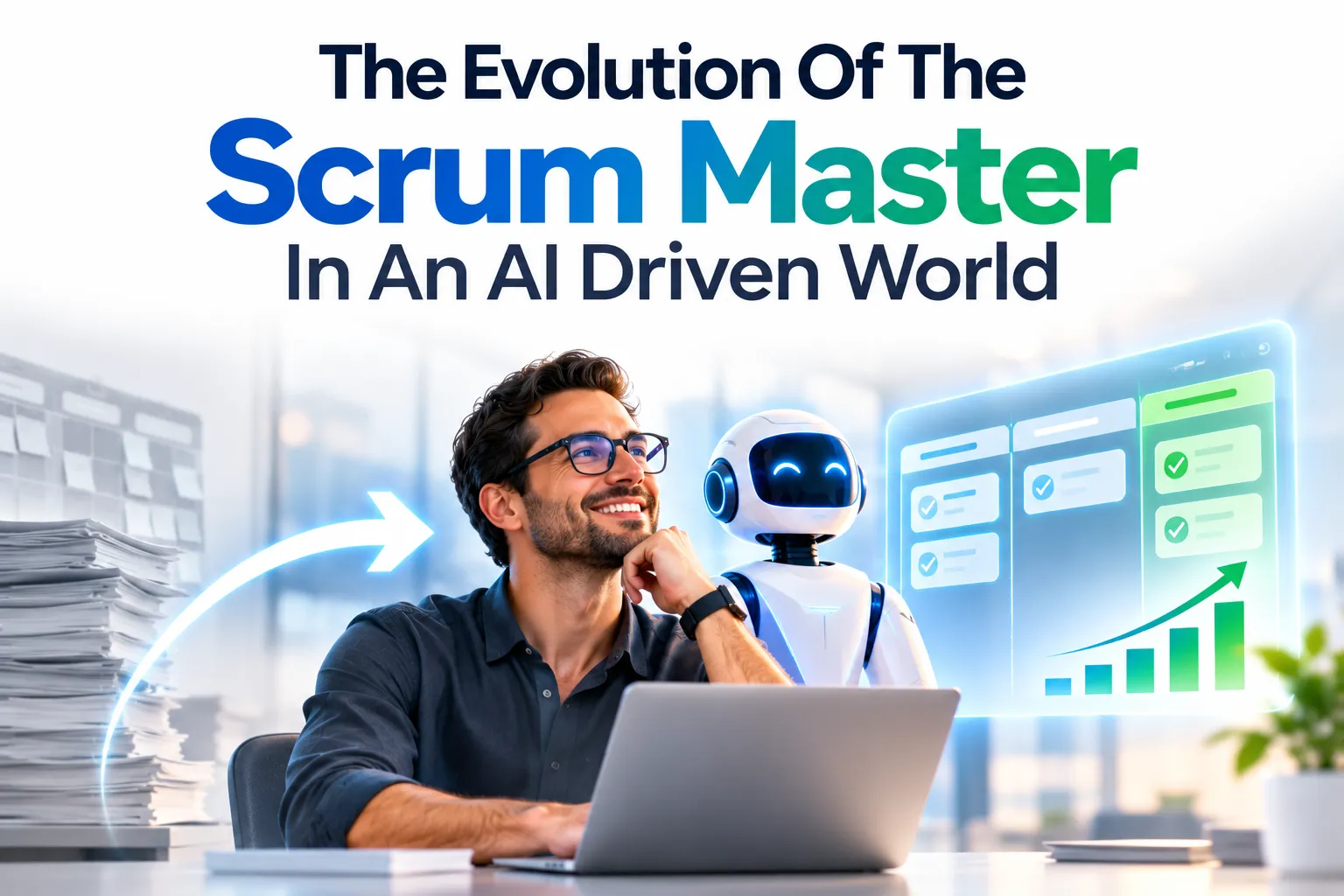
The Scrum Master role is changing, and AI is a big reason why.
For years, Scrum Masters have helped teams stay organized, remove roadblocks, manage Agile ceremonies, and keep projects moving forward. Those responsibilities still matter, but AI is creating opportunities to handle much of the repetitive work more efficiently.
Think about how much time goes into preparing sprint reports, tracking blockers, reviewing Jira tickets, gathering updates, and identifying delivery risks.
What if AI could help with much of that work?
The opportunity isn't to replace Scrum Masters. It's to give them more time to focus on what actually improves team performance.
Moving Beyond Meetings and Status Updates
A traditional Scrum Master spends a significant amount of time coordinating activities across development teams.
Daily standups, sprint planning, retrospectives, backlog refinement, and stakeholder reporting are all important parts of the Agile process.
But the administrative work surrounding those activities can become time-consuming.
Scrum Masters often find themselves manually reviewing Jira boards, following up on incomplete tickets, compiling sprint metrics, and preparing reports for leadership.
While these tasks are necessary, they don't always represent the highest-value use of an experienced Scrum Master's time.
AI can help change that.
By automating repetitive activities and providing faster access to delivery insights, Scrum Masters can spend less time collecting information and more time helping teams solve problems.
How AI Is Changing the Scrum Master Role
AI isn't changing the fundamentals of Agile. It's changing how teams can execute them.
Here are a few practical examples.
Sprint planning and backlog readiness: AI can help analyze historical sprint performance, identify incomplete requirements, highlight dependencies, and support more informed planning conversations.
Automated reporting: Instead of manually preparing sprint summaries, AI can help generate progress updates using information already available in project management tools.
Early risk identification: AI-assisted analysis can highlight recurring blockers, aging tickets, delivery trends, and potential bottlenecks before they become larger problems.
Retrospectives: AI can summarize recurring themes, organize feedback, and help teams track whether improvement actions are producing results.
Cross-team coordination: For organizations with multiple teams and distributed resources, AI can help consolidate updates and surface dependencies that might otherwise be missed.
The common theme is simple: less time gathering information, more time improving delivery.
Of course, AI-generated insights still need human review. A delayed ticket doesn't always indicate a problem, and historical sprint data can't capture every business priority or team challenge.
That's where an experienced Scrum Master remains essential.
The Scrum Master Becomes More of a Delivery Enabler
As AI takes on more administrative work, the Scrum Master has an opportunity to become more strategic.
Instead of spending most of the day tracking progress, they can focus on improving how work moves through the organization.
That includes helping teams remove recurring bottlenecks, improve collaboration, strengthen Agile practices, and deliver more predictable results.
Consider an engineering team that consistently misses sprint commitments.
A traditional approach might involve reviewing Jira tickets, collecting feedback, and manually identifying patterns across previous sprints.
With AI-assisted analysis, the Scrum Master can potentially identify recurring issues faster, such as unclear requirements, excessive work in progress, or dependencies between teams.
The Scrum Master can then focus on addressing those underlying problems rather than spending hours assembling the information.
AI provides the insights. The Scrum Master helps turn those insights into action.
How Ciberspring Helps Teams Put AI Into Practice
At Ciberspring, we see AI as an opportunity to improve technical delivery, not simply introduce another tool.
Through our technical staffing, AI as a Service, and delivery support capabilities, we help organizations connect experienced technical professionals with AI-enabled workflows that reduce manual effort and improve execution.
For Scrum Masters, that could involve incorporating AI-assisted reporting, backlog analysis, delivery insights, and workflow automation into existing Agile processes.
For engineering leaders, it may mean improving visibility across teams and identifying opportunities to accelerate delivery.
For IT leadership, the opportunity is to make better use of existing technology investments while building more consistent and scalable processes.
The goal isn't to reinvent Agile.
It's to make the work surrounding Agile more efficient so teams can focus on delivering value.
Looking to Improve Agile Delivery With AI?
Whether you're expanding your technical team or exploring ways to reduce manual work across your existing delivery processes, Ciberspring can help identify practical opportunities.
Connect with Ciberspring to schedule a conversation.
What This Means for Enterprise Teams
The impact of AI-enabled Scrum practices can extend well beyond the Scrum Master.
For engineering leaders, better visibility into sprint performance and recurring bottlenecks can support more predictable delivery.
For Product Owners, improved backlog analysis and requirements clarity can reduce unnecessary back-and-forth during development.
For QA teams, earlier visibility into dependencies and delivery risks can improve coordination around testing and releases.
For executives, automated reporting can provide a clearer understanding of progress without requiring additional administrative effort from delivery teams.
These improvements may seem small individually, but across multiple teams and ongoing projects, they can create meaningful operational efficiencies.
The key is measuring whether those efficiencies translate into better outcomes.
Are teams spending less time preparing reports? Are blockers being resolved faster? Are requirements clearer? Is delivery becoming more predictable?
Those are the questions that matter.
AI-Ready Scrum Masters Will Bring More Value
As organizations continue adopting AI, the expectations placed on Scrum Masters will naturally evolve.
Strong communication, facilitation, coaching, and problem-solving skills will remain essential.
But increasingly, organizations will also benefit from Scrum Masters who understand how to use AI to improve delivery workflows.
That doesn't mean every Scrum Master needs to become an AI engineer.
It means understanding which activities can be automated, how to interpret AI-generated insights, and where human judgment is still necessary.
The strongest Scrum Masters will combine their Agile expertise with an ability to use AI effectively.
And for companies looking to improve delivery without continuously adding resources, that combination can be particularly valuable.
The Future of Agile Is Human Expertise Amplified by AI
AI isn't eliminating the need for Scrum Masters. It's creating an opportunity for the role to evolve.
Less time spent on repetitive reporting and administrative work means more time available for coaching teams, resolving obstacles, improving processes, and supporting delivery.
For enterprises, the opportunity is to build more efficient Agile teams without sacrificing the human collaboration that makes them effective.
Ciberspring helps organizations move toward that future by combining technical talent, AI-enabled delivery practices, automation, and custom solutions that address real business challenges.
Because the future of Agile isn't about running more ceremonies or generating more reports. It's about helping teams deliver better results with less friction.
If your organization is looking to modernize Agile delivery or explore how AI can improve the effectiveness of your technical teams, reach out to Ciberspring to start the conversation.
Author

Tom Boller Jr.

Sales Director - Digital
Share this article


Speak With Our Team
Share this article