 Adobe
Adobe  Sitecore
  Gradial
  PEGA
PEGA What is Salesforce’s Agentforce?
Jan 15, 2026 | 4 min read
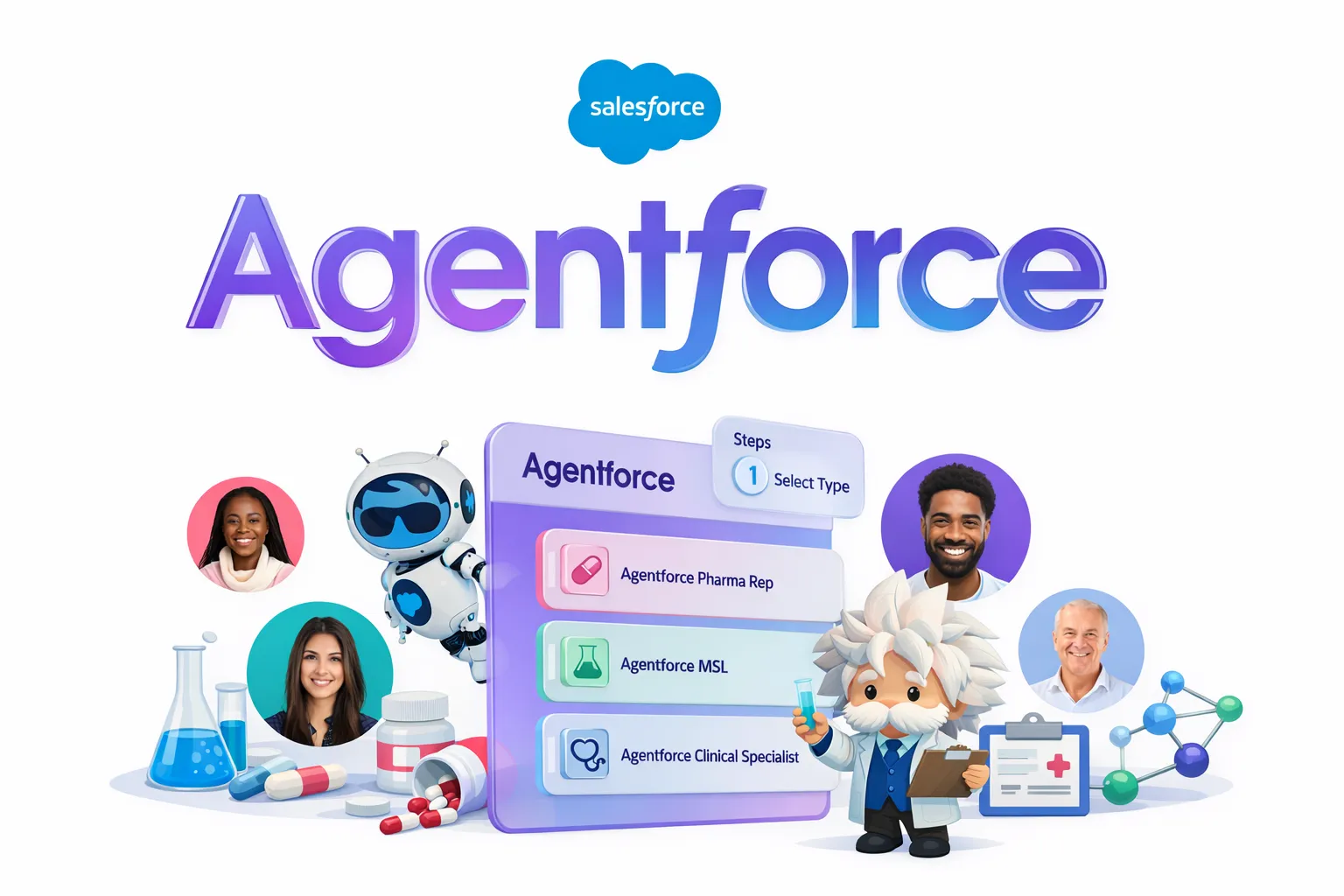
What is SalesforceAgentforce? Here’s the simple answer:
Salesforce Agentforce is Salesforce’s platform for building AI agents that can do real work inside Salesforce, not just answer questions. Salesforce positions Agentforce as a way to deploy agents that can help teams by taking action across common workflows, using your business context and data. Agentforce overview
Agentforce in one sentence
Think of Agentforce as a set of ai agents for crm that can read what is happening, decide what to do next, and then do the work, based on the guardrails you set.
How Agentforce is different from normal CRM automation
Traditional CRM automation is rules-based.
You set a trigger like: “If someone clicks an email, then add them to a journey.” That works, but it is rigid.
Agentforce is built for autonomous agents that can work with context. Salesforce explains how Agentforce can plan andtake action , instead of only following a fixed script. How Agentforce works
For marketers, Salesforce describes this as agentic marketing, where agents help with campaign creation, personalization, orchestration, and optimization.
What an AI agent can do for marketing teams
Marketing teams spend a lot of time on repeat tasks that do not feel like real marketing. That is where salesforce ai agents can help.
A well-scoped agent can:
- Draft a campaign brief based on a goal
- Build an audience segment using CRM and engagement data
- Suggest next best steps for HCP journeys
- Summarize performance and highlight what changed
- Create tasks for follow-up when engagement spikes
Salesforce positions these agents as always-on helpers for marketing work, especially in personalization and optimization. Agentforce for marketing
If you want help choosing the first use case and building a safe rollout plan, talk with CI Digital.
Top Agentforce marketing use cases in life sciences
Life sciences marketing needs speed, but it also needs proof and control. These are the most practical wins.
1) Better targeting and less wasted outreach
Salesforce shared a life sciences insight that leaders estimate about 30% of sales and marketing effort is wasted due to issues like targeting the wrong people or sending the wrong message.
Agentforce can help reduce this by using signals to improve segmentation and recommend next steps based on real activity and context. Agentforce overview
2) Faster campaign setup and content production
Agents can speed up campaign setup by generating draft briefs, draft audience logic, and journey steps, then routing work for review. Salesforce describes marketing agents that take action across campaign creation and optimization.
3) More consistent personalization across HCP and patient journeys
Instead of one-size-fits-all segments, agents can help adjust messaging and timing based on what an HCP or patient actually does. Salesforce frames this as moving from one-way campaigns toward more dynamic engagement through agentic marketing.
4) Less manual reporting and faster decisions
If your team spends too much time pulling dashboards and writing recaps, Agentforce pairs well with Salesforce marketing analytics and intelligence tools that are built to unify data and reporting. Marketing Intelligence
Trust, privacy, and safety basics
In pharma and health, trust is non-negotiable.
Salesforce points to the Einstein Trust Layer as a security and privacy foundation for generative AI.
For teams that need deeper detail, Salesforce developer documentation outlines protections like grounding in trusted data, masking sensitive data, toxicity detection, and audit trail and feedback.
This is where salesforce einstein ai becomes important for life sciences teams. It is not only about generating text. It is about using AI with controls that help teams manage risk.
Compliance and proof
In regulated marketing, it is not enough to move fast. You need to show what happened and why.
Salesforce states that Agentforce includes Audit Trail capabilities so teams can track AI agent actions and outputs for governance and compliance.
That traceability matters when approvals, claims, and content versions must be provable.
Need Help Setting Up or Switching To Agentforce?
Switching to Agentforce Salesforce can feel like a big leap, especially for life sciences marketing teams who need speed and strict control at the same time.
CI can help you go from “we are interested” to “we are live” without chaos.
Here is what we typically support:
- Agentforce readiness and roadmap: We help you choose the first 1 to 3 use cases that are safe, high impact, and easy to measure.
- Data and integration setup: We connect the systems marketing relies on so your ai agents for crm are pulling from trusted data, not guessing.
- Guardrails and governance: We help define permissions, rules, and review steps so your team stays aligned with privacy and compliance requirements.
- Marketing use case builds: We configure agents for real marketing work like segmentation support, follow-up workflows, and campaign setup tasks.
- Measurement and optimization: We help you track what the agents change, prove ROI, and safely expand after the first win.
If you want to explore Agentforce for your marketing team, connect with CI Digital and we will help you map a clear rollout plan.
How to start without creating risk
Start with one workflow that is high-repeat and low-risk, then scale.
Good starting points:
- Internal reporting summaries
- Segment QA checks
- Drafting internal briefs using approved inputs
- Routing tasks to the right owner
Salesforce also publishes guidance for planning and operating agents through a structured approach, including governance and lifecycle thinking. Agent development lifecycle
Then expand in steps:
- Add stricter guardrails
- Add human review where needed
- Track time saved, errors reduced, and cycle time improvements
Related read
If you are also building safe AI habits for regulated content, read A Pharma Marketer’s Guide to Compliant AI Copy.
Quick FAQs
Is Agentforce salesforce the same as a chatbot?
Not really. A chatbot mostly answers. Agentforce is designed for agents that can take action.
What is the simplest way to explain ai agents?
AI agents are tools that can decide the next step and complete tasks, not just generate text.
What should life sciences teams do first?
Start with a safe workflow, lock down data and permissions, and use trust and guardrails before scaling.
Author

Marcus Calero

Marketing Content Manager
Share this article


Subject Matter Expert


Gabriel Gonzalez
Salesforce Solution Architect
3x Salesforce Certified professional with a passion for technology and building client relationships.
Speak With Our Team
Share this article